The Origins of US-Saudi Media Collaboration
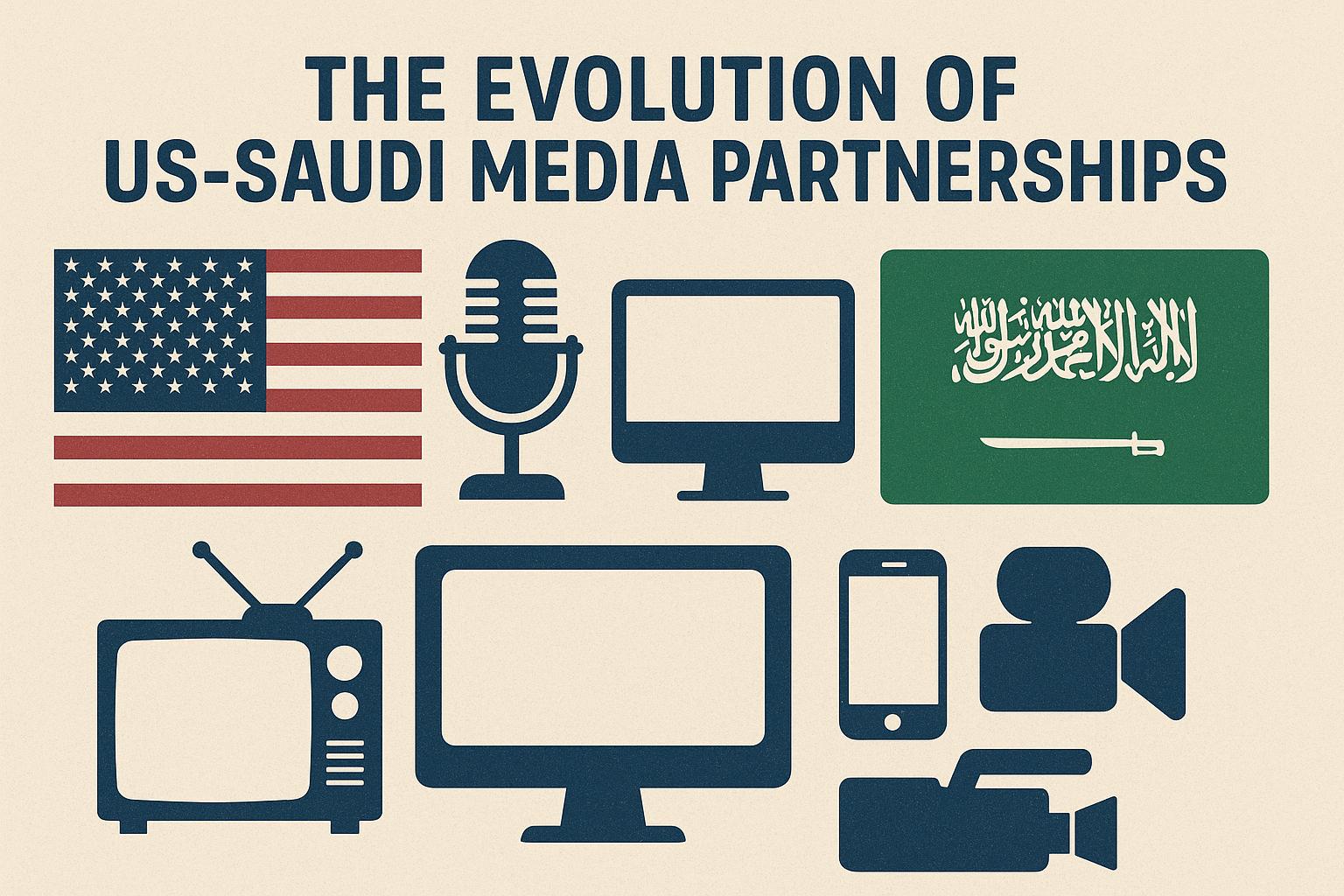
The collaboration between the United States and Saudi Arabia in media ventures can be traced back to the mid-20th century. As Saudi Arabia’s oil wealth began to grow, so did its interest in modernizing and expanding its communication networks. American media companies saw opportunities to partner with Saudi entities to share technology, expertise, and content.
Early Developments
In the post-World War II era, Saudi Arabia experienced significant economic growth fueled by its burgeoning oil industry. This economic boom led to an increased focus on modernization, including the development of the country’s media infrastructure. The relationship between the United States and Saudi Arabia in this sector gained significant momentum in the 1970s. During this time, American broadcasting companies began to play a pivotal role in providing technical support and expertise to help the Kingdom establish and grow its media infrastructure. This era marked the introduction of television as a popular medium in Saudi Arabia, facilitated by American firms which provided the necessary broadcasting equipment and training for Saudi personnel.
The introduction of television was a major step forward for Saudi communication networks, and it was accompanied by intensive training programs. American experts were instrumental in these programs, ensuring that Saudi professionals were proficient in both the technical and creative aspects of broadcasting. The educational exchange not only benefited the Saudis, who were able to develop a competence in modern media technologies but also the American companies, which gained a foothold in an emerging media market.
Technological Advancements and Training
The collaboration between the United States and Saudi Arabia in the 1980s and 1990s witnessed a shift toward digital technology and innovations in broadcasting. During these decades, the global media landscape was undergoing rapid changes with the advent of satellite broadcasting and the early stages of digital media. American companies took the lead in supplying advanced equipment capable of supporting these new technologies. Training programs became even more intensive and comprehensive, focusing on cutting-edge broadcasting techniques and digital media management. This period was crucial for knowledge transfer and marked a significant step toward developing Saudi Arabia’s domestic media capability.
American media firms provided state-of-the-art broadcasting equipment, which included digital transmitters and receivers. This technology was vital in facilitating high-quality broadcasting across Saudi Arabia’s vast geographical expanse. The significance of this technological support cannot be overstated, as it enabled Saudi Arabia to lay the foundations of a robust and modern media infrastructure. By the end of the 1990s, Saudi Arabia had a well-established media presence that included both local and international content.
21st Century Media Partnerships
The turn of the century marked a new phase in US-Saudi media partnerships, characterized by increased content sharing and co-productions. This was facilitated by the rapid growth of digital platforms and satellite television. These advancements provided a medium through which partnerships could flourish, leveraging both American and Saudi resources and expertise in media.
Content Sharing and Co-Production
In the early 2000s, there was a notable shift toward content sharing and co-production between American and Saudi media entities. Joint ventures were established to produce content that would be appealing to both Western and Middle Eastern audiences. The idea was to create films, documentaries, news programs, and entertainment series that bridged cultural differences, thus fostering greater understanding and goodwill between the populations of the two countries.
These collaborations were not only about content creation but also about enhancing market reach for both parties involved. Films and series that were co-produced found audiences in both regions, thereby enhancing the cultural ties between them. An important aspect of this collaboration was its ability to foster cultural understanding by presenting diverse narratives that highlighted cross-cultural themes.
Digital Media Platforms
The rise of the internet and digital media in the early 2000s opened new avenues for collaboration. Companies like the MBC Group in Saudi Arabia expanded their reach by partnering with American digital platforms to distribute content globally. These partnerships allowed for a greater exchange of digital content and expertise, enabling Saudi media companies to adopt cutting-edge technologies and keep up with global trends in media production and distribution.
The proliferation of digital platforms led to the creation of innovative media content that could be accessed on-demand, catering to the increasingly digital-savvy audiences in both countries. This expansion of digital media also encouraged the exploration of new forms of content, such as live streaming and interactive programming, which had become significant trends in the media industry.
Current Trends and Future Prospects
Today, US-Saudi media partnerships continue to evolve with a focus on innovation, cultural exchange, and mutual economic benefits.
Focus on Innovation and Investment
In recent years, the focus of US-Saudi media collaborations has been on innovative content creation and technological advancement. Saudi media companies, such as the Saudi Research and Media Group, are investing heavily in technology to transform their operations. By drawing on the expertise and partnerships with leading US tech and media firms, these companies are positioning themselves to become key players in the global media industry.
Innovation is at the heart of these partnerships, with an emphasis on creating content that is not only entertaining but also technologically sophisticated. This has led to the exploration of new media formats, such as web series and podcasts, which are gaining popularity among younger audiences.
Cultural Exchange and Soft Power
Both countries emphasize media partnerships as a tool for cultural exchange and soft power. By creating content that addresses cross-cultural themes, these collaborations aim to enhance understanding and foster goodwill between the United States and Saudi Arabia. The media has become an effective avenue for promoting cultural values and narratives, which in turn shapes public perceptions and diplomatic relations.
These initiatives are not confined to entertainment alone but extend to news and educational content, enabling both countries to share their stories and perspectives with the world. Through documentaries, cultural programs, and discussions, media partnerships have become instrumental in highlighting shared values and challenges, thus contributing to the global dialogue on important issues.
The Road Ahead
As the media landscape continues to evolve, US-Saudi media partnerships are expected to adapt to new technologies such as artificial intelligence, virtual reality, and augmented reality. These innovations are reshaping content creation and distribution, offering exciting possibilities for collaboration. The integration of AI, for example, is revolutionizing content personalization and audience engagement, while VR and AR are providing immersive experiences that were previously unimaginable.
These advancements will likely open new opportunities for collaboration, ensuring that the US-Saudi media partnership remains dynamic and responsive to changing global media trends. By embracing these technologies, both countries have the potential to lead in the next wave of media innovation, setting new standards for quality and audience engagement. The future of this partnership promises a fusion of creativity and technology, aimed at producing content that resonates with global audiences.
This article was last updated on: January 25, 2026