
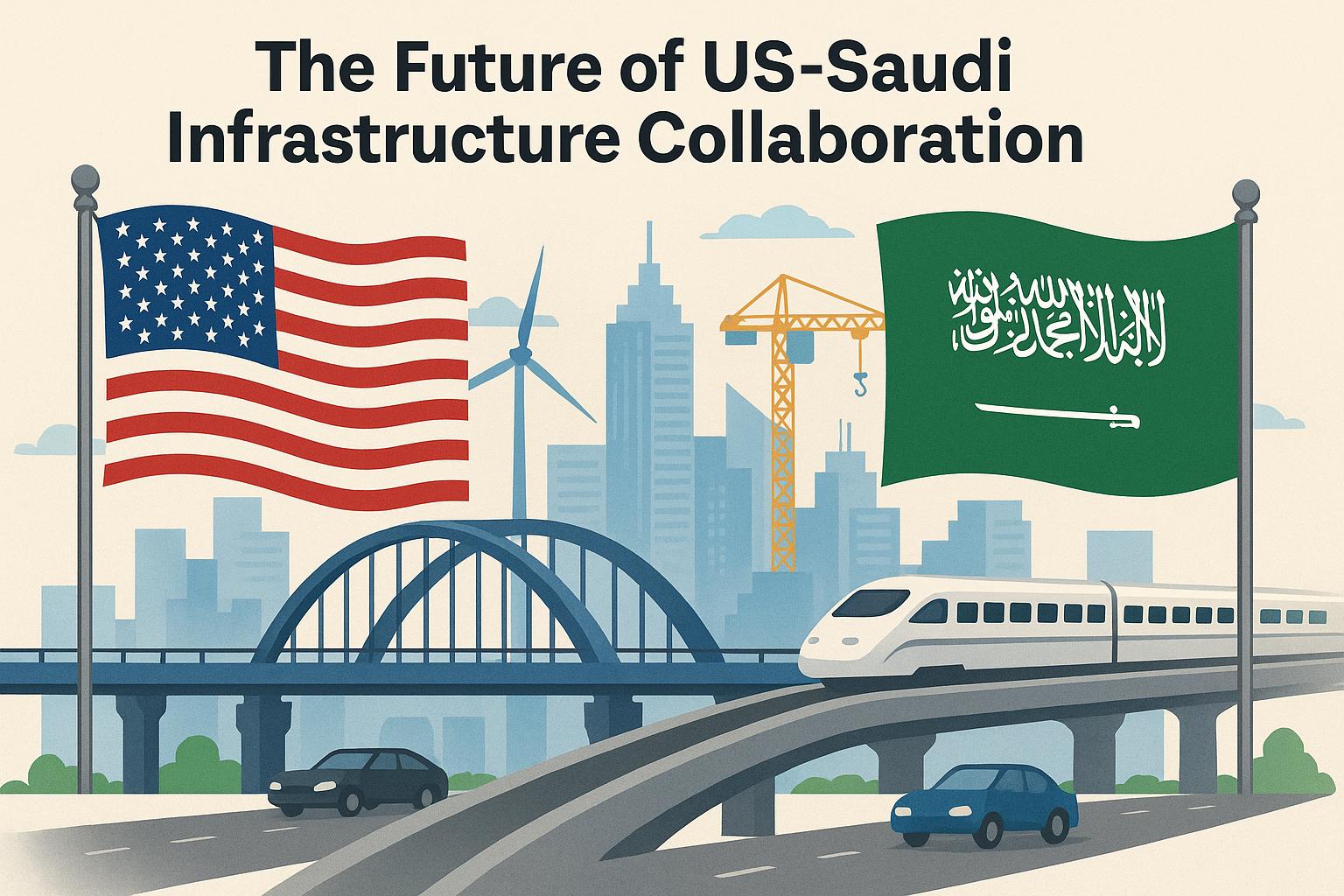
The Current Landscape of US-Saudi Infrastructure Collaboration
The collaboration between the United States and Saudi Arabia in the realm of infrastructure development has a long and evolving history. Rooted in mutual interests, this partnership has traditionally focused on energy and defense. However, recent developments have seen an expansion into areas like technology, renewable energy, and urban development. Saudi Arabia’s Vision 2030, an ambitious plan to diversify its economy, serves as a catalyst for such transformations, presenting numerous opportunities for US companies to engage in large-scale projects.
Key Sectors of Collaboration
While energy continues to be a significant area of collaboration, new sectors are emerging as points of interest for US companies. Renewable energy, especially solar and wind power, has garnered significant attention. Saudi Arabia’s abundant natural resources provide strategic advantages in harnessing renewable energy, and American firms are well-positioned to contribute with advanced technologies and expertise.
Saudi Arabia’s geographical positioning, coupled with its solar radiation intensity and wind corridors, offers a fertile ground for renewable energy projects. The integration of solar photovoltaic technology and wind energy systems from US companies can help Saudi Arabia reduce its reliance on oil and move toward a more sustainable energy mix.
Additionally, another vital sector is digital infrastructure. The US can play a crucial role in Saudi Arabia’s ambitions to become a tech hub, not just regionally but globally. Investments in this area go beyond the development of smart cities. They also encompass aspects such as cybersecurity, data management solutions, and the broader information technology landscape. US companies have a competitive edge in providing secure, scalable, and efficient digital solutions. These contributions can assist Saudi Arabia in safeguarding data, managing digital infrastructure efficiently, and promoting tech-driven economic growth.
Urban development is yet another field with considerable potential for collaboration. As cities in Saudi Arabia undergo modernization and expansion, American companies specializing in urban planning and smart technologies can provide expertise in creating sustainable, efficient, and livable urban environments. This includes integrating IoT technologies, optimizing resource use, and improving public services.
Challenges in the Collaboration
Despite mutual interests, there are challenges in the US-Saudi infrastructure collaboration. Geopolitical tensions can significantly affect business dealings. Political stability is a crucial factor that influences the economic engagement of foreign companies in Saudi Arabia. Policy differences can also impact the extent and nature of cooperation. Issues such as differing regulatory standards and business practices need careful navigation.
Intellectual property rights is another critical area. Ensuring the protection of intellectual property is vital for fostering innovation and maintaining competitive advantages. US companies will need assurances that their proprietary technologies and business models are safeguarded within the Saudi Arabian market.
Transparency in the regulatory frameworks is a requirement for successful collaboration. Clear, consistent, and transparent regulations help in creating an environment conducive to foreign investments. Enhanced regulatory frameworks would further attract US companies and drive economic collaboration.
Another challenge involves the alignment of corporate social responsibilities with Saudi Arabian laws and practices, particularly regarding labor rights and environmental protections. US companies must carefully balance these factors while engaging in sustainable and ethical business practices. Understanding local customs, traditions, and corporate governance standards is essential to ethically establish and operate businesses within the region.
The Role of Innovation and Technology
Innovation plays a pivotal role in cementing the future of US-Saudi infrastructure collaboration. American companies bring technological expertise that can be instrumental in addressing some of Saudi Arabia’s infrastructure challenges. This includes innovations in construction methods, smart tech for urban planning, and advanced materials that enhance sustainability.
For example, construction technologies that embrace 3D printing can facilitate faster, more cost-effective building practices. Smart urban planning technologies can contribute to optimizing traffic management, energy distribution, and waste management in burgeoning cities.
Partnerships between academic institutions and private enterprises also serve as a bridge to foster innovation. Collaborative research initiatives could drive technological advancements tailored to address specific regional needs in Saudi Arabia. Engaging in joint research and development initiatives can generate new ideas, products, and technologies that benefit both parties.
Innovation hubs and incubators in both the United States and Saudi Arabia provide platforms for entrepreneurs and startups to nurture novel ideas that can reshape the infrastructural landscape. The cross-pollination of ideas and expertise can lead to the creation of cutting-edge products and services for infrastructure enhancement.
Future Prospects
The future of US-Saudi infrastructure collaboration looks promising, given the alignment of strategic interests and growing mutual benefits. As Saudi Arabia continues its efforts to diversify and modernize its economy, US companies have the potential to play a significant role in this transformation. This requires adaptive business strategies that respect cultural and legislative nuances while leveraging technological and operational expertise.
Adopting a strategy that focuses on long-term partnerships rather than short-term gains can pave the way for sustained collaboration in the infrastructure space. Educational exchange programs and workforce development initiatives can also help create a skilled workforce poised to drive the future of infrastructure in Saudi Arabia.
Establishing joint ventures and facilitating knowledge transfer will be integral to ensuring continuous growth and development. Forging a path toward more robust collaboration will largely depend on managing geopolitical challenges and fostering mutual trust and respect. Maintaining open lines of communication and promoting cultural understanding can further strengthen the ties between the two nations.
The ongoing dialogue between the United States and Saudi Arabia will encompass a broad spectrum of sectors beyond infrastructure, enhancing mutual interests and economic goals. as enterprises and governments work collaboratively, they can unlock unprecedented growth opportunities.
In conclusion, the prospects for US-Saudi infrastructure collaboration offer a landscape ripe with potential. While challenges exist, innovation, adaptability, and cooperation will drive enduring partnerships. For further information on US-Saudi relations and business opportunities, you can explore resources provided by organizations like the American Chamber of Commerce in Saudi Arabia and initiatives led by the Saudi Embassy in the United States.
This article was last updated on: November 19, 2025