
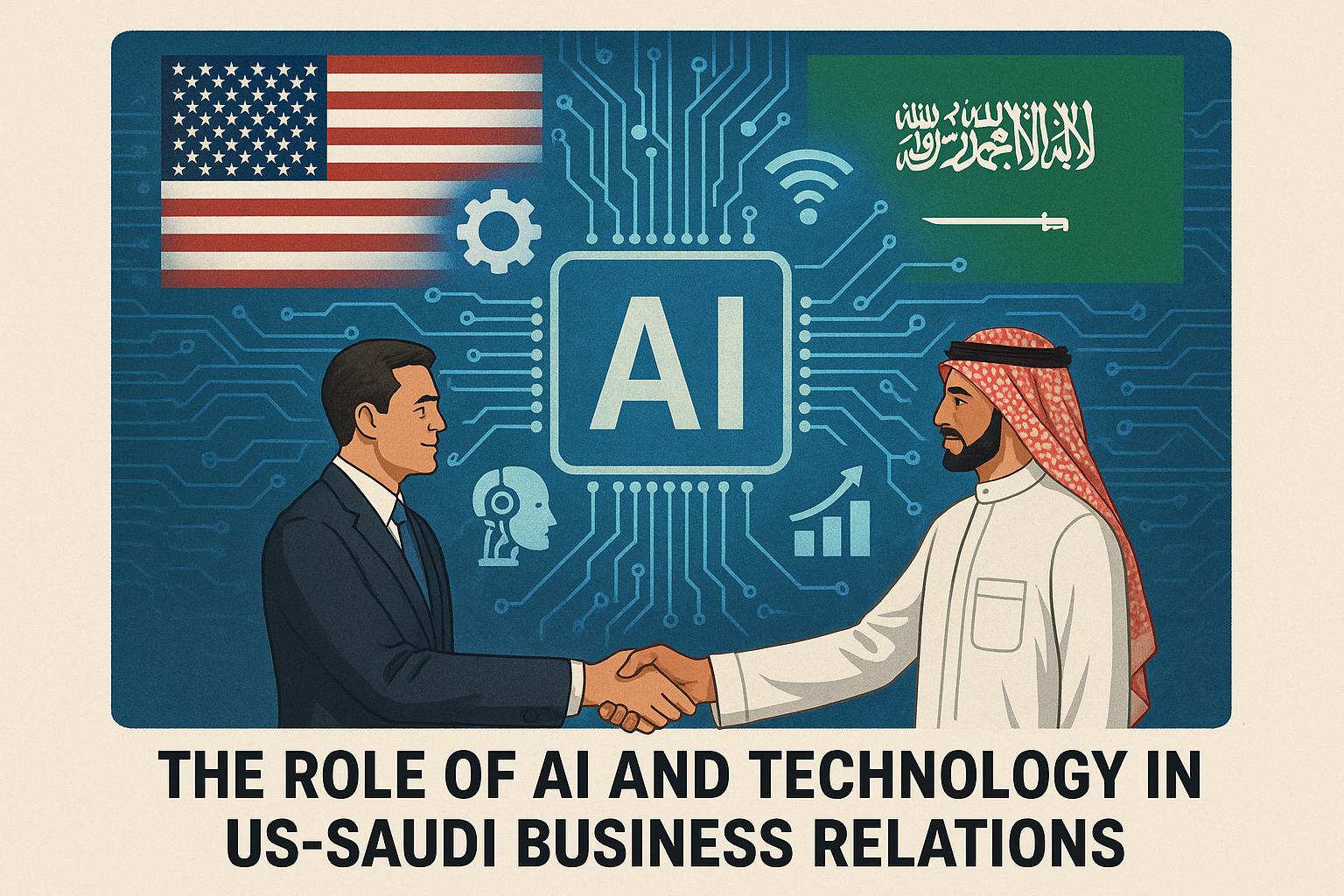
The Impact of AI and Technology on US-Saudi Business Relations
The longstanding relationship between the United States and Saudi Arabia has largely been defined by economic ties rooted in the energy sector, specifically oil. However, as the global focus transitions towards technology and innovation, the dynamics of US-Saudi business relations are undergoing substantial changes. In particular, innovations such as Artificial Intelligence (AI) and other technological advancements hold significant sway in transforming these interactions.
Investment in Technology
The Saudi Arabian government’s Vision 2030 initiative is a major driving force behind the nation’s economic transformation. The primary objective of this initiative is to reduce Saudi Arabia’s traditional dependence on oil revenues by diversifying its economic portfolio. The strategy places a strong emphasis on the integration of cutting-edge technologies, with AI taking a leading role.
Saudi Arabia’s commitment to technology encompasses a wide range of sectors, including renewable energy, healthcare, and logistics. By embracing these areas, the nation aims to create a sustainable and diversified economic environment. Investments in technology are not confined to local ventures; they extend to forming alliances with international technology leaders.
In parallel with Saudi efforts, US companies and technology firms are taking a proactive approach by collaborating with Saudi counterparts. These American companies gain access to burgeoning markets while participating in large-scale projects that Saudi Arabia meticulously plans and executes. This symbiotic relationship is beneficial for both parties, allowing the exchange of expertise and the fostering of innovation.
Collaborative Ventures and Partnerships
The evolving technology landscape has encouraged numerous collaborative ventures and partnerships between US and Saudi entities. Saudi Arabian organizations are increasingly seeking the expertise of American technology leaders to integrate AI and other technological solutions across various industries.
Significant steps have been taken by large US tech companies to establish regional offices in Saudi Arabia. These offices serve as hubs that facilitate direct collaboration with Saudi firms. Whether in sectors like banking, transport, or healthcare, AI solutions from the US are being customized to fit local needs and demands.
Education also plays a pivotal role in this collaborative ecosystem. Partnerships between American educational institutions and Saudi universities are working to advance AI research. This collaboration fosters an exchange of knowledge and innovation by training the next generation of innovators who will drive these changes forward.
The Role of AI in Economic Diversification
AI stands at the core of Saudi Arabia’s strategy for economic diversification. It is a key enabler of enhanced productivity and innovation, helping various sectors adapt to new business models and practices.
In the healthcare sector, AI applications are revolutionizing traditional diagnostics and patient management practices. AI technology supports doctors in diagnostics, helping them manage patient information more efficiently. Similarly, the agriculture sector benefits from the implementation of AI systems, which introduce smart resource management methods. These AI-driven solutions offer more sustainable and cost-effective methods of operation.
For US firms, the growing reliance on AI in Saudi Arabia creates a fertile ground for potential partnerships. American businesses that offer AI-driven solutions are increasingly finding opportunities within the Saudi market. These partnerships allow US firms to contribute to, and benefit from, the economic changes quantifying the demand for smart, AI-powered solutions.
Challenges and Opportunities
The integration of AI and other technologies offers a plethora of opportunities for US and Saudi companies. However, these opportunities come with a distinct set of challenges. The primary challenge lies in navigating the differences in regulatory environments between the two countries. Compliance with disparate local laws and data privacy regulations requires careful adjustment and planning.
Moreover, cultivating a skilled workforce adept in technological disciplines is essential. Both nations must invest in education and training to build a workforce capable of sustaining advanced technological ecosystems. This necessity creates further collaborative opportunities, particularly in the realm of education and skill development.
Successful collaboration hinges on the ability of both nations to address these challenges through mutual understanding and comprehensive agreements. By overcoming these obstacles, US and Saudi entities can foster a robust and mutually beneficial partnership in the technological domain.
For further exploration of Vision 2030 initiatives and understanding the strategic direction of Saudi Arabia under this plan, interested parties can visit the official Vision 2030 website. In addition, to learn more about the extent of US involvement and its strategic contributions to these initiatives, one can refer to the official website of the US Department of Commerce.
In conclusion, AI and technology serve as transformative agents in reshaping US-Saudi business relations. As both nations continue their journey of innovation and collaboration, the focus of their partnership is gradually shifting towards sustainable development and technological excellence. This transition highlights a new era in the economic relationship between the United States and Saudi Arabia, encapsulating a shared commitment to progress and modernization. The challenges that lie ahead will surely be significant, but the promise of a technology-driven future is a compelling impetus for continued partnership and mutual growth.
This article was last updated on: December 3, 2025