Introduction
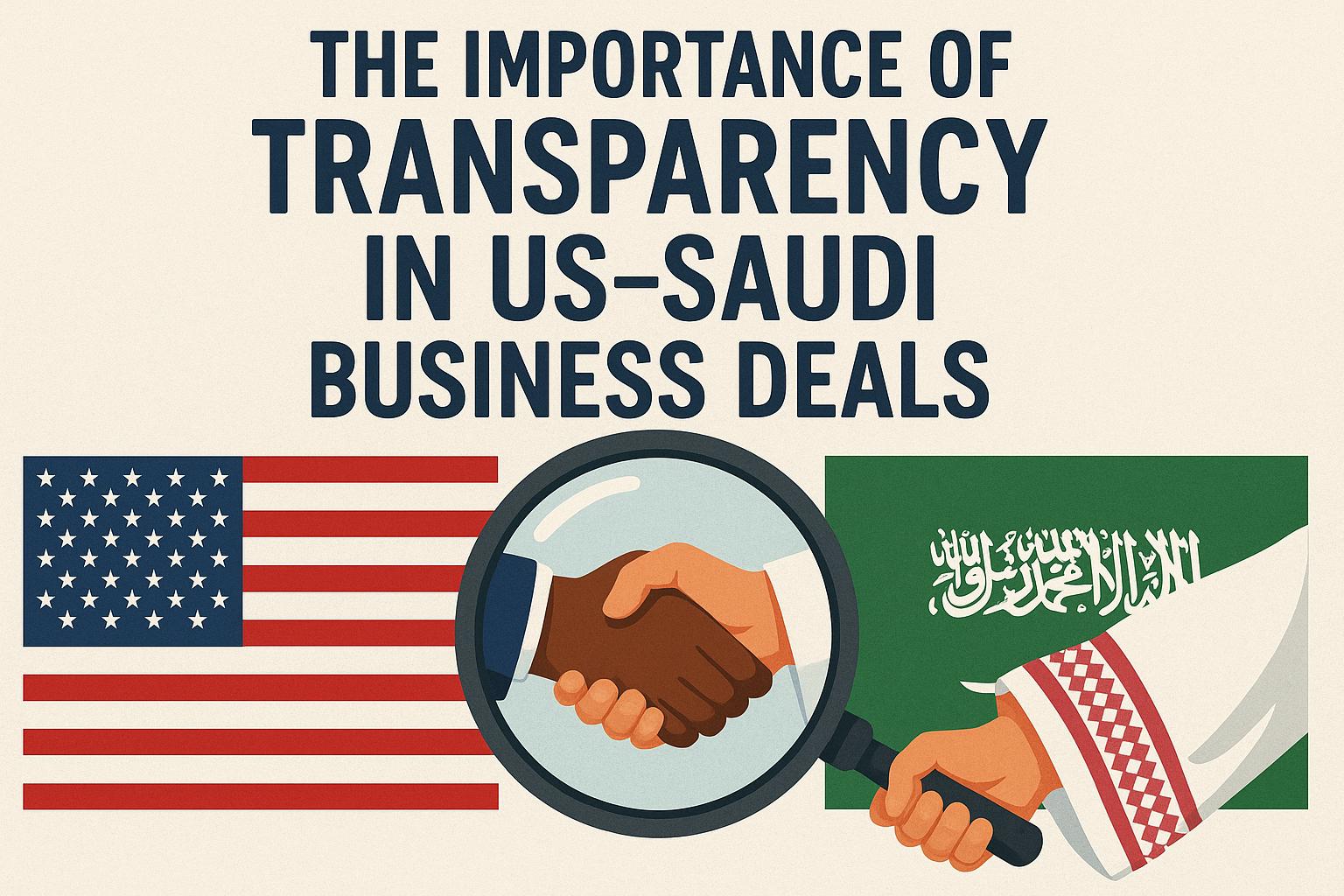
Transparency in international business deals is considered a key factor in fostering trust and sustainability in bilateral trade relationships. This is particularly crucial in US-Saudi business deals, where differing cultures, regulatory environments, and economic frameworks require a clear and open approach. Both countries stand to benefit significantly by ensuring transparent practices that align with global standards, thereby enhancing mutual trust and facilitating smooth business operations.
Enhancing Trust and Cooperation
Establishing and maintaining trust is paramount in any business relationship. Transparency, which involves the clear communication of business intentions, operations, and results, helps build this trust. For US and Saudi enterprises, transparent dealings can minimize misunderstandings that arise from differences in business cultures and legal systems. Transparent communication ensures that both parties have a mutual understanding of each other’s expectations and goals, which is foundational to strong cooperation.
Transparency goes beyond mere communication. It encompasses honesty in reporting business operations and results. When US and Saudi businesses engage in transparent practices, they lay the groundwork for long-term partnerships. By making intentions clear and aligning operational standards, businesses can work more closely together in projects and investments, thus supporting a stable business environment conducive to cooperation. For more information on the strategic importance of transparency in bilateral relations, you can visit this resource provided by the American Business Group of Riyadh.
Mitigating Risks
Transparent business practices are crucial in reducing risks associated with fraud and corruption. By ensuring all transactions are visible and compliant with international standards, US-Saudi business deals can lower the chances of legal disputes and financial losses. Given the substantial investments often involved in these bilateral transactions, risk mitigation is extremely important.
Understanding the risks involved in international trade and commerce can be complex. By operating transparently, businesses are better equipped to identify potential risks early on and address them appropriately. Transparency in financial dealings, adherence to the laws, and ethical business conduct are all aspects that can significantly reduce unforeseen complications and challenges in cross-border commerce.
Regulatory Compliance
Both the US and Saudi Arabia have regulatory frameworks that require adherence to specific guidelines and rules. Transparent operations help ensure that these regulations are met. However, differences in regulatory environments can pose challenges. Transparent communication and collaboration between US and Saudi companies can facilitate smoother compliance with both countries’ legal requirements.
Familiarity with regulatory requirements ensures that both businesses avoid unnecessary penalties and legal grievances. By embracing transparency, companies can more readily adapt to regulatory changes and updates in both regions. US companies can access up-to-date regulatory information through official channels, which could be further explored here.
Promoting Sustainable Investments
Involving transparency in business dealings paves the way for long-term positive impacts, fostering sustainable investments. By openly sharing information and maintaining accountability, businesses can create more sustainable and ethical investments that benefit both parties. This methodology contributes to more stable financial environments conducive to long-term partnerships and collaborations.
Sustainability is not just an ethical choice but a strategic one. In business, focusing on sustainable practices is increasingly recognized as a critical success factor. Transparency supports sustainability by ensuring that businesses can clearly communicate and measure their achievements and goals, promoting accountability and responsibility in all engagements.
Upholding Reputation
Reputation in global trade is a vital asset, for both US and Saudi businesses. Maintaining a good reputation hinges on transparent dealings, which demonstrate a commitment to ethical standards and social responsibility. When businesses operate transparently, they send a strong signal to the market and potential investors of reliability and integrity.
A robust reputation attracts better opportunities, partnerships, and investments, creating a positive cycle that benefits both businesses and stakeholders. By prioritizing transparency, businesses can protect and enhance their reputation, making them more appealing to international collaborators.
Conclusion
The importance of transparency in US-Saudi business deals cannot be overstated. It is a crucial element that fosters trust, mitigates risks, ensures regulatory compliance, promotes sustainability, and enhances reputations. As both nations continue to strengthen and diversify their economic ties, prioritizing transparent practices will be indispensable in facilitating successful and mutually beneficial partnerships. Transparent business dealings support efficient operations, providing a framework for addressing the cultural and regulatory complexities inherent in US-Saudi business relationships. Continued commitment to transparency will undoubtedly contribute to the ongoing success and growth of these international engagements.
This article was last updated on: June 28, 2026