
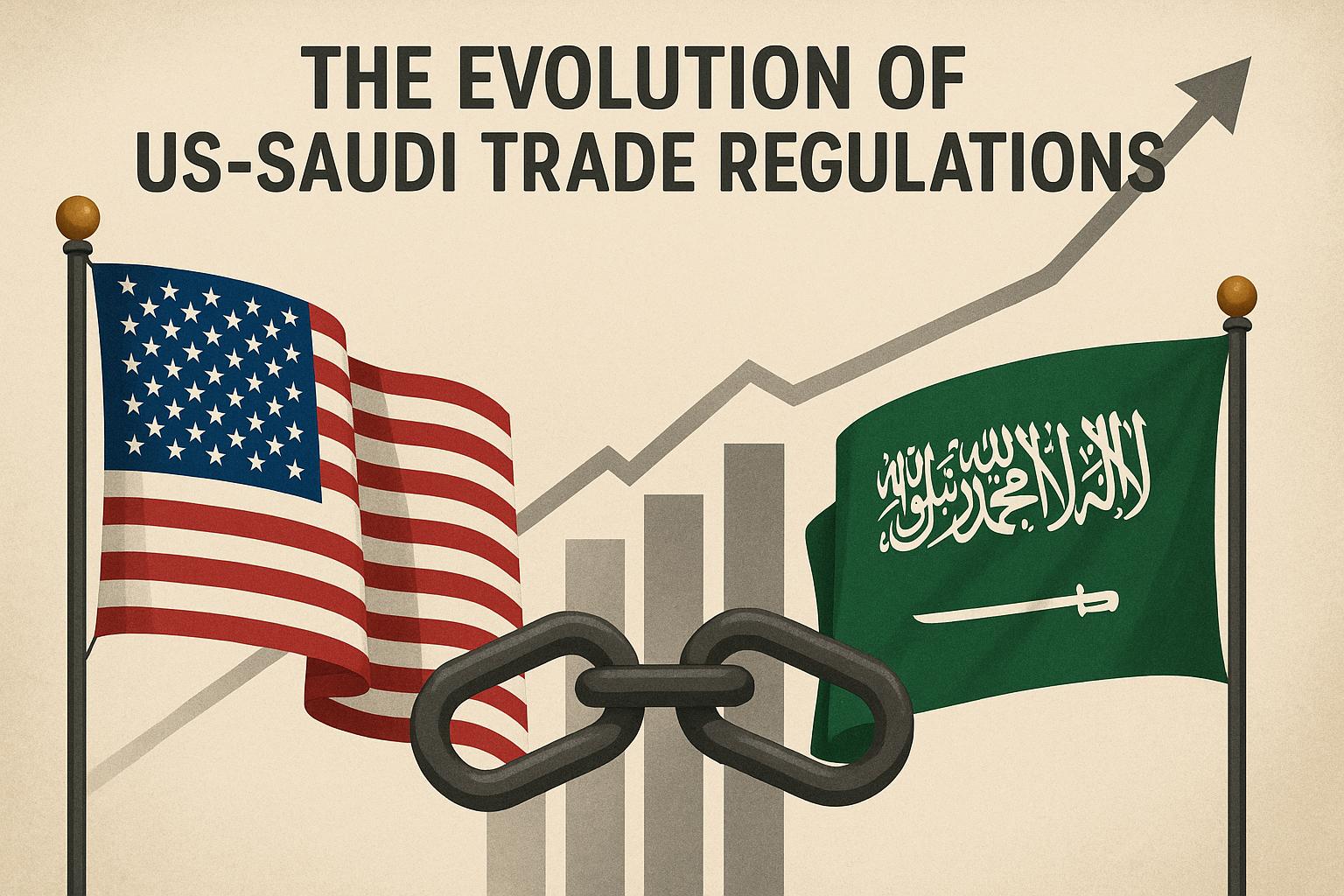
The Historical Context of US-Saudi Trade Relations
The trade relations between the United States and Saudi Arabia have experienced a profound evolution since the early 20th century. This transformation can be largely attributed to pivotal developments beginning with the discovery of oil in Saudi Arabia during the 1930s. This discovery served as a catalyst for American companies, which began substantial investments in the burgeoning Saudi oil sector, thereby marking the inception of a lasting economic partnership. The initial economic interactions laid a solid foundation for the establishment of broader trade agreements and more intricate regulatory frameworks over the ensuing decades.
Key Developments in Trade Agreements
Over the years, a number of pivotal agreements have collectively shaped the regulatory and trade landscape between the United States and Saudi Arabia. Among these, the 1974 establishment of the US-Saudi Arabian Joint Economic Commission stands out as a landmark achievement. This agreement was designed with the explicit aim of fostering economic cooperation between the two countries, which in turn led to enhanced American involvement in significant Saudi infrastructure projects.
In more recent times, the Vision 2030 initiative, which was launched by Saudi Arabia, has had a substantial impact on trade regulations. As part of a strategic move to diversify its economy and decrease its reliance on oil revenue, Vision 2030 has opened new avenues for American companies, especially in sectors such as technology, healthcare, and renewable energy. This initiative has consequently led to a notable expansion in trade opportunities and enhanced regulatory alignment between the two nations.
The Impact of US-Saudi Relations on Trade Policies
Political relations between the United States and Saudi Arabia have also played an instrumental role in shaping trade policies. Throughout the years, diplomatic ties between these two nations have experienced fluctuations due to various geopolitical factors. Trade regulations have frequently mirrored the prevailing political climate, with phases of robust cooperation being occasionally interrupted by tensions that influenced economic agreements.
During periods marked by heightened political tension, trade regulations have occasionally undergone alterations or have become more restrictive. Conversely, when bilateral political alliances strengthen, it often leads to more favorable trade conditions, benefiting both countries economically.
Modern Regulatory Challenges and Adaptations
In contemporary times, several challenges have emerged, affecting the regulatory landscape of US-Saudi trade. A key issue involves regulatory compliance concerning human rights and labor laws. There is an increasing expectation for Western businesses, including American firms, to adhere to rigorous ethical standards. This growing scrutiny has necessitated alterations in trade practices with countries like Saudi Arabia, where such issues are under close observation.
Another significant factor is the advancement of technology and the rise of the digital economy, which have introduced new regulatory considerations. Both countries are actively working on adapting their regulatory frameworks to address various issues, including cybersecurity, digital taxation, and the protection of intellectual property. These adaptations are essential to ensure that trade relations remain current and mutually beneficial.
Looking Ahead: The Future of US-Saudi Trade Relations
As both nations continue to navigate the complexities of global trade and evolving geopolitical dynamics, the future of US-Saudi trade relations is likely to maintain an emphasis on diversification and innovation. Looking forward, it is anticipated that both countries will endeavor to forge more comprehensive trade agreements, incorporating sustainable practices and technology-driven solutions to address emerging global challenges.
Furthermore, with the ongoing global shifts in energy production and consumption, collaborative efforts toward transitioning to renewable energy sources may play an increasingly critical role in shaping future trade regulations. The adaptability and resilience of the regulatory frameworks governing bilateral trade will be pivotal, ensuring that trade relations between the United States and Saudi Arabia remain robust, resilient, and mutually advantageous.
As these trade relations evolve, there will be a corresponding impact on various sectors. The shift towards renewable energy signifies a shared acknowledgment of the need to invest in sustainable energy practices, which could lead to strengthened cooperation and investment in green technologies. Moreover, advancements in technology sectors might encourage both nations to develop regulations that promote innovation while safeguarding against potential cybersecurity threats.
Overall, the dynamic nature of US-Saudi trade relations suggests a future characterized by cooperation and mutual benefit, driven by shared interests in economic diversification, technological advancements, and sustainable development. The ongoing dialogue and negotiation between the two countries will likely continue to pave the way for innovative agreements that bolster economic ties while addressing pressing global challenges.
This article was last updated on: June 25, 2026