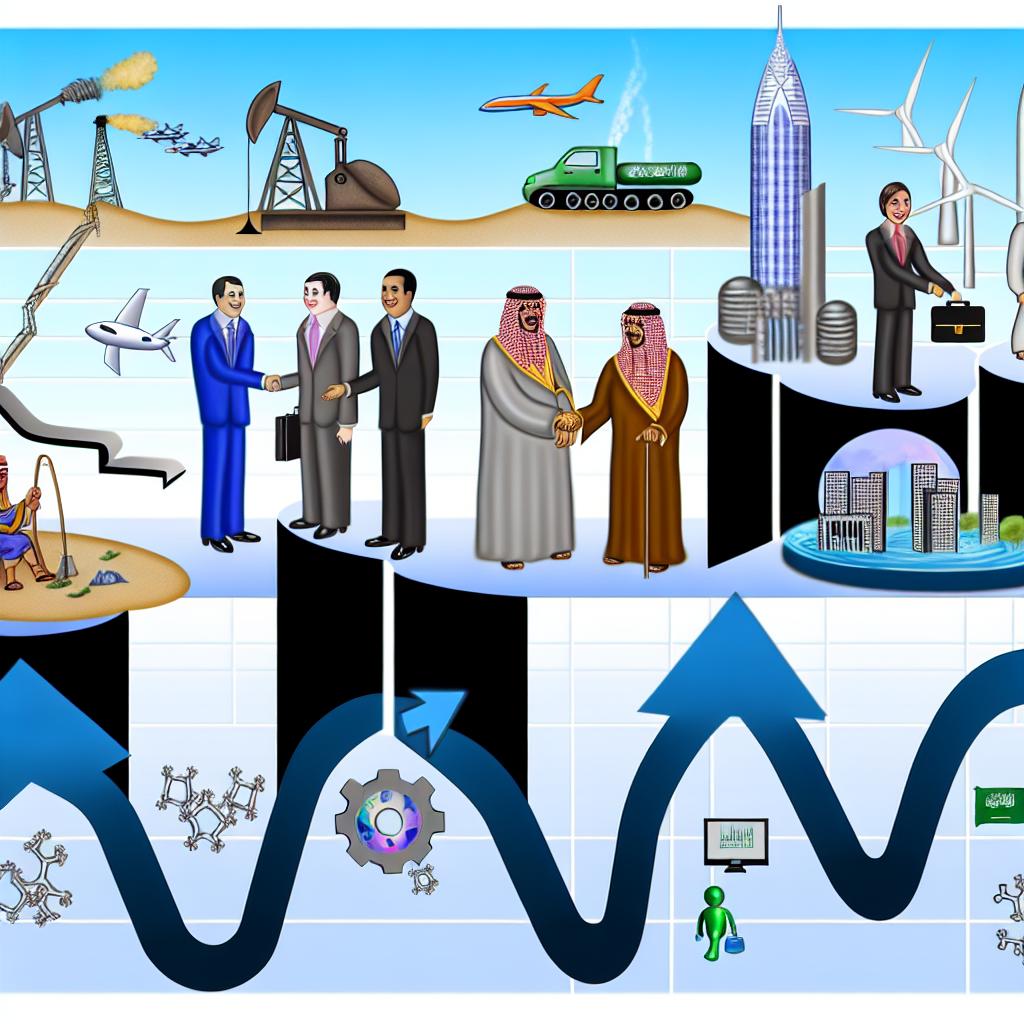
Overview of US-Saudi Business Synergies
The collaboration between the United States and Saudi Arabia in the oil and gas sector has been a cornerstone of economic relations between the two nations for decades. This partnership extends beyond simple trade dynamics, encompassing technology exchange, joint ventures, and mutual investments. Both countries benefit from this synergy, with the US gaining access to Saudi’s vast oil reserves, and Saudi Arabia leveraging advanced American technology and expertise.
Historical Context
The relationship between the US and Saudi Arabia in the oil and gas industry dates back to the discovery of oil in Saudi Arabia in 1938 by American geologists. This partnership has evolved significantly over the years, often influenced by geopolitical factors and global oil market dynamics. Despite occasional fluctuations, the underlying economic interests have consistently driven the collaboration forward.
The discovery of oil transformed Saudi Arabia’s economy, providing the country with substantial resources to pursue various economic and infrastructure projects. This newfound wealth required cutting-edge technological expertise, which the United States was more than willing to provide. Over the decades, mutual benefits have served as the bedrock for a relationship characterized by resource exchange and economic cooperation. The US companies, in return, have secured a reliable supply of oil, critical for sustaining its industrial activities and energy needs.
Technological Collaborations
One of the key aspects of US-Saudi cooperation involves technology transfer and joint development of energy technologies. American companies often collaborate with Saudi partners to implement cutting-edge technologies in exploration, drilling, and refining processes. This includes the use of advanced seismic imaging techniques and environmentally friendly technologies aimed at reducing carbon footprints in oil extraction.
The exchange of technology is not unilateral. As Saudi Arabia invests in strengthening its technological capabilities, the US benefits from shared research findings, innovations in oil extraction, and developments in refining processes. Joint research and establishment of centers for technological excellence have allowed both nations to stay at the forefront of energy innovations. This ensures that both countries are well-equipped to face global energy challenges, such as the shift towards more sustainable practices and the reduction of environmental impact.
Investment Initiatives
Significant investments flow in both directions between the two countries. American oil companies have substantial investments in Saudi Arabia, while Saudi entities have similarly invested in the US energy sector. Such cross-border investments are facilitated by a blend of strategic foresight and mutual economic benefits. Saudi investments in the US often focus on acquiring stakes in oil companies, while American companies invest in Saudi projects, ensuring a stable supply of crude oil.
The magnitude of these investments reflects the depth of trust and the vision for long-term cooperation. Through shared ventures, both countries not only solidify their economic ties but also expand their influence in the global market. Cross-investment strategies enhance economic interdependence, fostering a climate where both nations benefit from the strengths and market efficiencies of each other.
Challenges and Opportunities
The US-Saudi oil and gas partnership is not without its challenges. Geopolitical tensions, fluctuating oil prices, and regulatory changes can impact the smooth operation of this collaboration. For instance, changes in policies affecting oil drilling regulations or trade tariffs can introduce elements of uncertainty.
However, these challenges are often counterbalanced by opportunities such as the shared goal of enhancing energy security and the mutual interest in diversifying energy sources. Both nations actively work to minimize risks through diplomacy and refined economic strategies. The potential to venture into new areas of clean energy and explore untapped markets in Asia or Africa presents vast opportunities.
Moreover, Saudi Arabia’s Vision 2030—an ambitious plan to diversify its economy beyond oil dependence—offers extensive collaboration opportunities in healthcare, education, and renewable energy. The US can be instrumental in achieving these goals, ensuring continuous strategic cooperation.
Future Prospects
Looking forward, the synergy between the US and Saudi Arabia in the oil and gas sector is expected to remain robust. Both nations are exploring avenues to incorporate renewable energy within their strategies, including solar energy projects and carbon capture technologies. Efforts to adapt to the evolving global energy landscape indicate that this long-standing partnership will continue to thrive.
The shift towards renewable energy represents an area of significant potential growth. Collaborative projects aimed at developing solar farms or wind energy initiatives can enhance the sustainability agenda in both nations. Additionally, innovations in carbon capture and storage techniques lay the groundwork for reducing environmental impact, a shared objective amidst growing international pressure to reduce emissions.
In conclusion, the US-Saudi relationship in the oil and gas sector reflects a well-established partnership grounded on mutual economic benefits, technological advancements, and strategic investments. While challenges exist, opportunities for growth and collaboration across various sectors underscore a promising future.
For more information, readers can explore official resources on energy collaboration at the US Department of Energy and the Saudi Aramco.
This article was last updated on: October 4, 2026