
Introduction
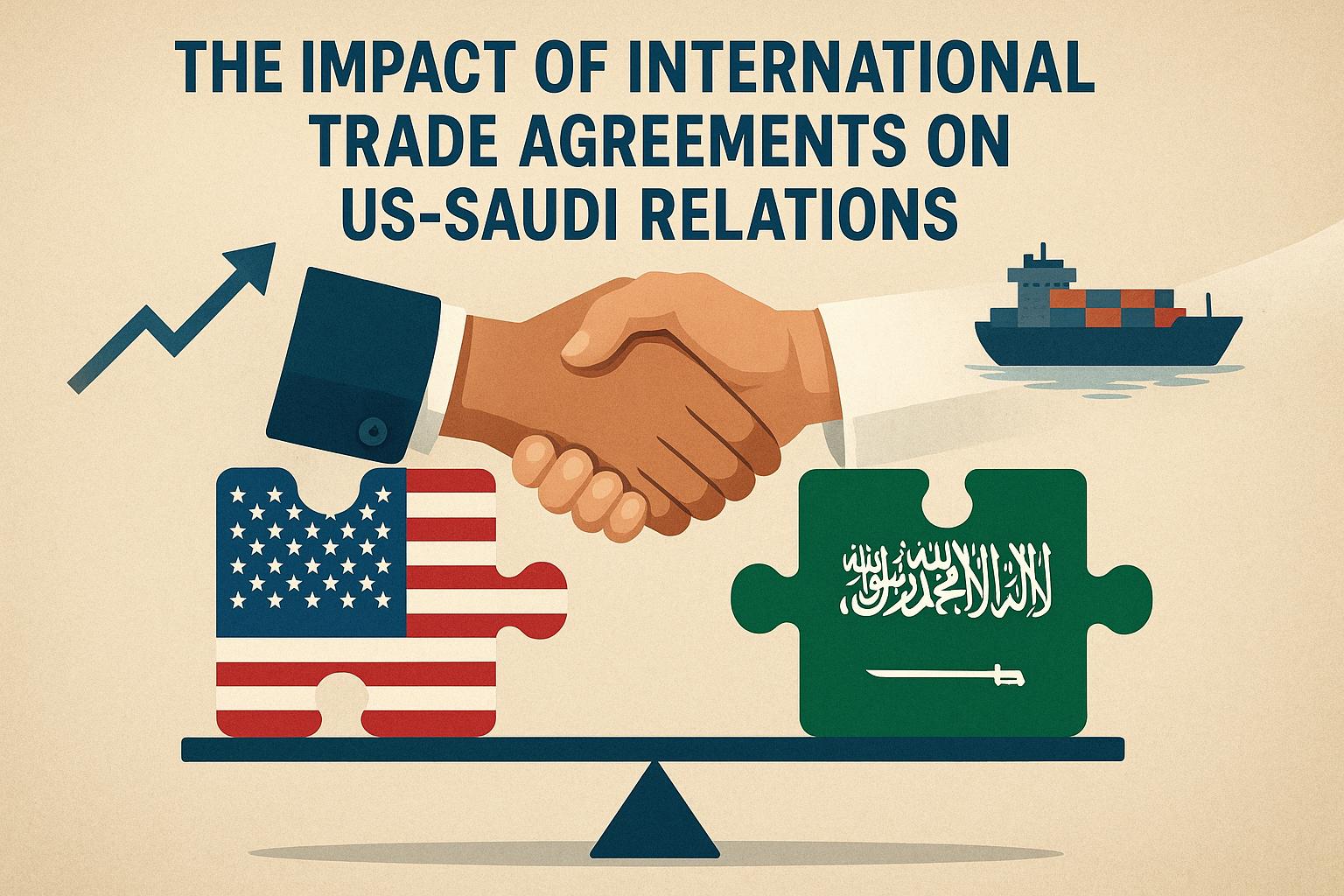
International trade agreements have undeniably had a profound influence on shaping the dynamics of global economic relations. The bilateral relationship between the United States and Saudi Arabia exemplifies this, as various trade agreements have left a significant imprint on numerous sectors, from energy to military collaboration. To truly grasp the depth of how these agreements impact the relationship between the two nations, it is essential to explore historical, economic, and political contexts.
Historical Context
Historically, the relationship between the US and Saudi Arabia has been characterized by a reciprocal dependency, primarily centered around oil and security. As early as the 1940s, the United States has depended heavily on the supply of Saudi oil, while Saudi Arabia has depended equally on US military support. Over the decades, trade agreements have solidified this dynamic, assuring a continuous flow of goods, services, and resources between the two countries.
Key Trade Agreements
Several trade agreements have been instrumental in shaping the relationship between the US and Saudi Arabia. Notably, Saudi Arabia’s accession to the World Trade Organization (WTO) in 2005 marked a crucial turning point. This membership was significant as it aligned Saudi Arabia’s trade practices with global norms and standards. The WTO framework facilitated enhanced trade with the United States by promoting transparency and systematically reducing trade barriers.
Another significant milestone in their trade relations is the Trade and Investment Framework Agreement (TIFA). This agreement is aimed at resolving trade and investment issues and fortifying bilateral relations. TIFA acts as a vital platform for discussing economic collaboration, thereby further strengthening the economic ties between the two countries.
Economic Impact
The trade agreements established between the United States and Saudi Arabia have profound economic implications. From the perspective of the United States, Saudi Arabia stands as a critical market for American goods, such as military equipment, vehicles, and agricultural products. These agreements have resulted in the opening of Saudi markets to US businesses, which in turn, reduced tariffs and encouraged foreign investment.
From Saudi Arabia’s vantage point, these agreements facilitate the export of oil and petrochemicals to the US market. As the Kingdom seeks to diversify its economy beyond oil, trade agreements have been instrumental in promoting other burgeoning sectors such as aviation, construction, and healthcare. These sectors are essential in contributing to Saudi Arabia’s ambitious Vision 2030 goals, which aim for economic diversification and sustainability.
Political Implications
While the primary aim of trade agreements is to derive economic benefits, they are often accompanied by political implications. The relationship between the US and Saudi Arabia is occasionally strained by political differences, human rights issues, and regional conflicts. However, trade agreements generally help to cushion these tensions by fostering dialogue and encouraging cooperation within the framework of mutual economic interests.
Challenges and Future Outlook
Despite the manifold benefits, challenges continue to persist in the trade relationship between the US and Saudi Arabia. Issues such as human rights abuses, prevailing geopolitical tensions, and shifts in global energy dynamics could potentially influence future agreements. In addition, the evolving energy policies and the broader global shift towards renewable energy sources may alter traditional trade patterns that once heavily relied on fossil fuels.
Looking forward, both nations may opt to pursue updated trade agreements that address these emerging challenges. Continued cooperation and adaptation to the shifting global economic landscape will be vital for sustaining strong US-Saudi relations.
The impact of international trade agreements cannot be understated when it comes to the US-Saudi relationship. These agreements not only facilitate economic exchanges but also act as a catalyst for political dialogue. While challenges remain, trade agreements have consistently served as a mechanism for reinforcing bilateral ties amid a complex and ever-changing global backdrop.
Sector-Specific Impacts
The influence of trade agreements on specific sectors is evident, particularly in areas such as defense, energy, and technology. In defense, the US has long been a primary supplier of advanced military hardware to Saudi Arabia. Trade agreements have streamlined processes for such transactions, ensuring that both parties meet their strategic objectives. For the US, this entails the bolstering of a key ally in a volatile region, while for Saudi Arabia, it means access to the latest defense technologies to enhance its national security.
In the energy sector, trade agreements have traditionally focused on oil imports and exports. However, with the world increasingly focusing on sustainable energy solutions, both countries are gradually exploring new ground in renewable energy collaborations. This marks a significant shift from the traditional oil-based trade dynamics, paving the way for more diversified energy trade agreements in the future.
The technology sector also benefits immensely from bilateral trade agreements. The US, known for its innovation and technological prowess, has much to offer Saudi Arabia as the Kingdom embarks on its Vision 2030 journey. Opportunities for collaboration in areas such as information technology and telecommunications are being explored, signaling a diversification of the traditional trade relationship.
Additional Challenges in Bilateral Trade
Despite the visible advantages, trade agreements between the US and Saudi Arabia also face hurdles that need addressing. Intellectual property rights enforcement is one such area where discrepancies may arise. Strengthening these rights is crucial for fostering innovation and trade in high-tech goods and services.
Moreover, regulatory differences can present hurdles for businesses operating across both nations. While agreements often work towards paving a smooth path for trade, navigating the varying regulatory landscapes continues to be a challenge. Ensuring compliance with each country’s trade regulations requires ongoing dialogue and cooperation, underscoring the need for clearer agreements and shared standards.
Another notable area of consideration is the changing political climate. Political shifts and realignments, either domestically or globally, can influence the stability and continuance of existing agreements. For instance, changes in leadership or policy priorities in either country could shift the focus of trade discussions, emphasizing the importance of maintaining open channels of communication.
The Path Forward
As we consider the future, it is clear that US-Saudi trade relations will need to continue evolving. Emphasizing innovation and striving for sustainable solutions should be paramount in future trade agreements. This evolution will demand not just economic acumen but political foresight and a commitment to mutual growth and development.
In summary, trade agreements have played a central role in fostering the US-Saudi relationship by enabling economic exchanges and encouraging political dialogue. Navigating the challenges and capitalizing on opportunities will require ongoing cooperation, flexibility, and adaptation to global changes. As both nations move forward, strengthened trade ties will remain pivotal in maintaining their longstanding relationship within an increasingly interconnected world.
This article was last updated on: September 27, 2026