Introduction
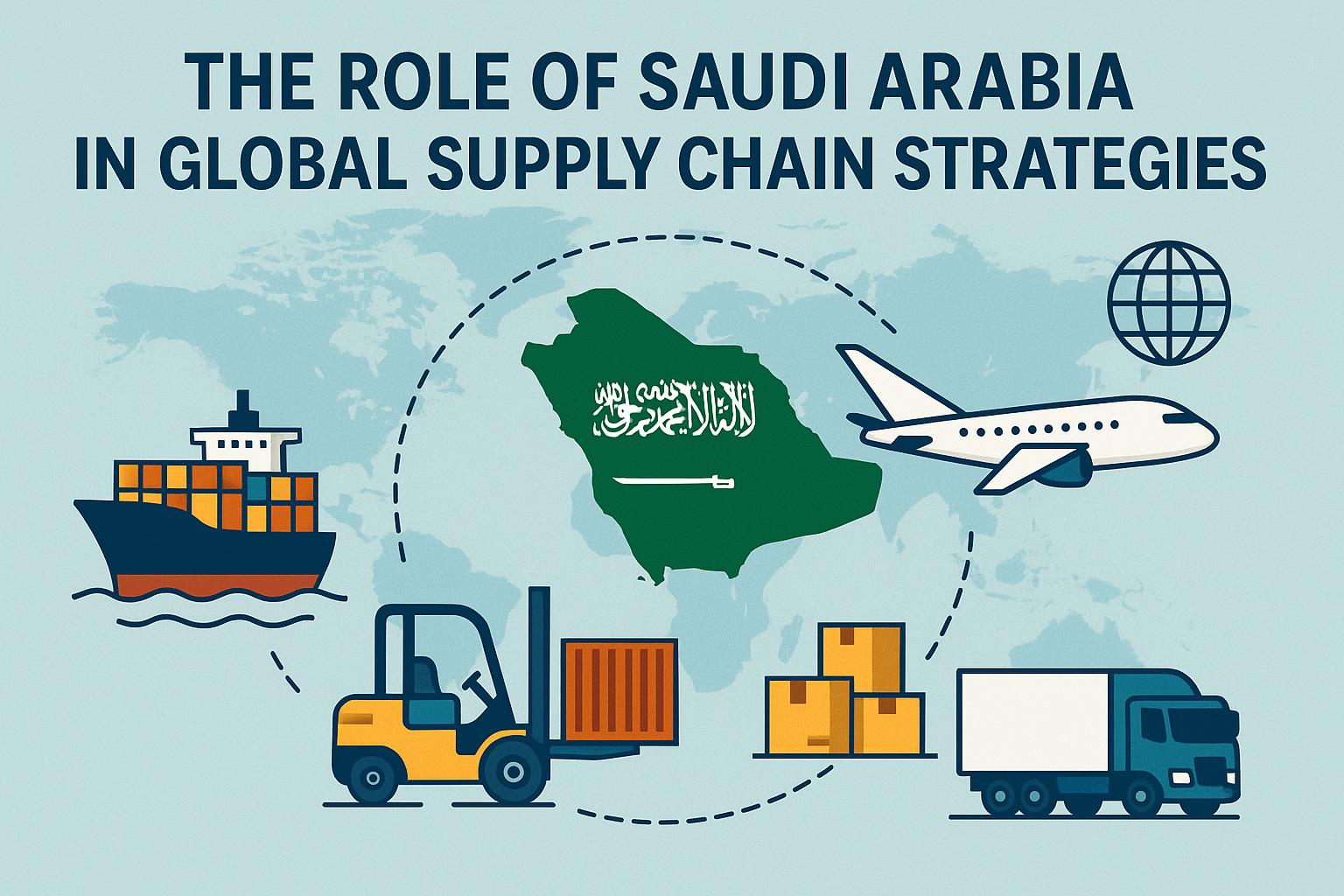
Saudi Arabia, a nation endowed with vast energy reserves and situated at a strategic geographical juncture, plays an indispensable role in global supply chain strategies. Its influence is far-reaching, impacting not just the energy sector but extending to various domains such as logistics, petrochemicals, and finance. For businesses and policymakers aiming to refine and optimize their strategies in a world that is becoming increasingly interconnected, gaining insight into the Kingdom’s contribution to global supply chains is of paramount importance.
Energy Sector
The bedrock of Saudi Arabia’s crucial role in global supply chains is its robust energy sector. As the world’s leading exporter of oil, largely managed by its state-owned behemoth, Saudi Aramco, the country exerts substantial influence over the global energy landscape. This dominance directly affects the availability and pricing of energy resources across the globe, forming a cornerstone upon which many other industries rely. Fluctuations in Saudi Arabia’s production levels or pricing strategies reverberate through markets worldwide, having significant impacts on sectors ranging from transportation to manufacturing. In this regard, understanding Saudi Arabia’s energy policies and market maneuvers becomes critical for stakeholders involved in global supply chains, as these policies can dictate market trends, energy availability, and overall industry stability.
Logistics and Infrastructure
Strategically located, Saudi Arabia acts as a vital confluence point between continents—Asia, Africa, and Europe—thereby positioning itself as a logistical nucleus. The nation has made hefty investments in its infrastructure to consolidate this role, transforming itself into a logistic hub. Noteworthy advancements include the augmentation of major ports like the King Abdulaziz Port in Dammam and the development of the King Abdullah Economic City, both aimed at boosting trade efficiency. Additionally, the Saudi Landbridge Project—a significant infrastructure undertaking—intends to link the Red Sea coast with the Arabian Gulf by rail. This project not only offers an alternative to traditional sea routes but also enhances regional connectivity, facilitating the seamless movement of goods. Such infrastructure investments are poised to significantly alter global trade routes, making Saudi Arabia an indispensable ally in international logistics and supply chain management.
Vision 2030 and Economic Diversification
A cornerstone of Saudi Arabia’s long-term strategy is the ambitious Vision 2030 initiative, designed to recalibrate the nation’s economy by pivoting it away from an excessive reliance on oil. This broader economic diversification strategy encompasses significant advancements in renewable energy, technology, and tourism sectors, thereby reshaping the global supply chain landscape. By investing in sectors such as non-oil exports and fostering an environment conducive to foreign direct investment, Saudi Arabia aims to diminish its dependency on oil-based revenues. In doing so, the Kingdom is establishing a more balanced economic framework. This pivot not only impacts global supply chain strategies by offering fresh avenues for collaboration and investment but also signifies a shift towards a more sustainable and diversified global economic architecture.
Petrochemicals Industry
Housing some of the largest petrochemical companies globally, Saudi Arabia leverages its strategic advantage by converting its crude oil supplies into valuable chemical products. This transformation adds considerable value to its oil exports, underpinning a thriving petrochemicals industry. The Kingdom’s competitive edge in petrochemicals exerts influence over supply chains that are intrinsically linked to the production of plastics, fertilizers, and chemicals. These industries, which form the backbone of sectors like agriculture and consumer goods, are consequently affected by any developments within Saudi Arabia’s petrochemical landscape, which underscores the far-reaching impact of the Kingdom in these arenas.
Financial Sector and Economic Reforms
In alignment with its diversification objectives, the Kingdom’s financial sector is undergoing substantial reforms. These changes encompass the privatization of state-owned enterprises and an opening of its stock market to foreign investors. Such reforms have the potential to significantly alter the global financial landscape pertinent to supply chains by enhancing access to capital and creating lucrative investment opportunities. For stakeholders within and beyond the region, these financial transformations present new potential for collaboration, funding, and investment, enabling a more dynamic and integrated approach to managing supply chains on a global scale.
Strategic Partnerships and Alliances
In a bid to strengthen its position within global supply chains, Saudi Arabia is actively engaged in forging strategic partnerships and alliances. Through trade agreements and joint ventures with international companies, the Kingdom aspires to amplify its global presence and influence supply chain dynamics. These partnerships often focus on the transfer of technology, knowledge, and expertise, thereby engendering benefits for local industries and facilitating more integrated and efficient supply chains. As these alliances evolve, they create a two-fold impact: fostering economic progress within Saudi Arabia while simultaneously reshaping the contours of global supply chains.
Conclusion
In summation, Saudi Arabia’s role within the framework of global supply chain strategies is multi-dimensional, spanning from its traditional core strength in the energy sector to burgeoning industries propelled by economic diversification and strategic infrastructure investments. As the Kingdom continues to evolve and innovate, its influence over global supply chains is poised to expand, commanding the attention of businesses and policymakers worldwide. A thorough comprehension of this dynamic is vital for harnessing new opportunities and effectively navigating potential risks inherent in the global supply chain environment. An acute awareness of Saudi Arabia’s role and its strategic initiatives will be instrumental for stakeholders aspiring to thrive in the contemporary global economic landscape.
This article was last updated on: September 6, 2026