The Influence of Think Tanks on US-Saudi Business Relations
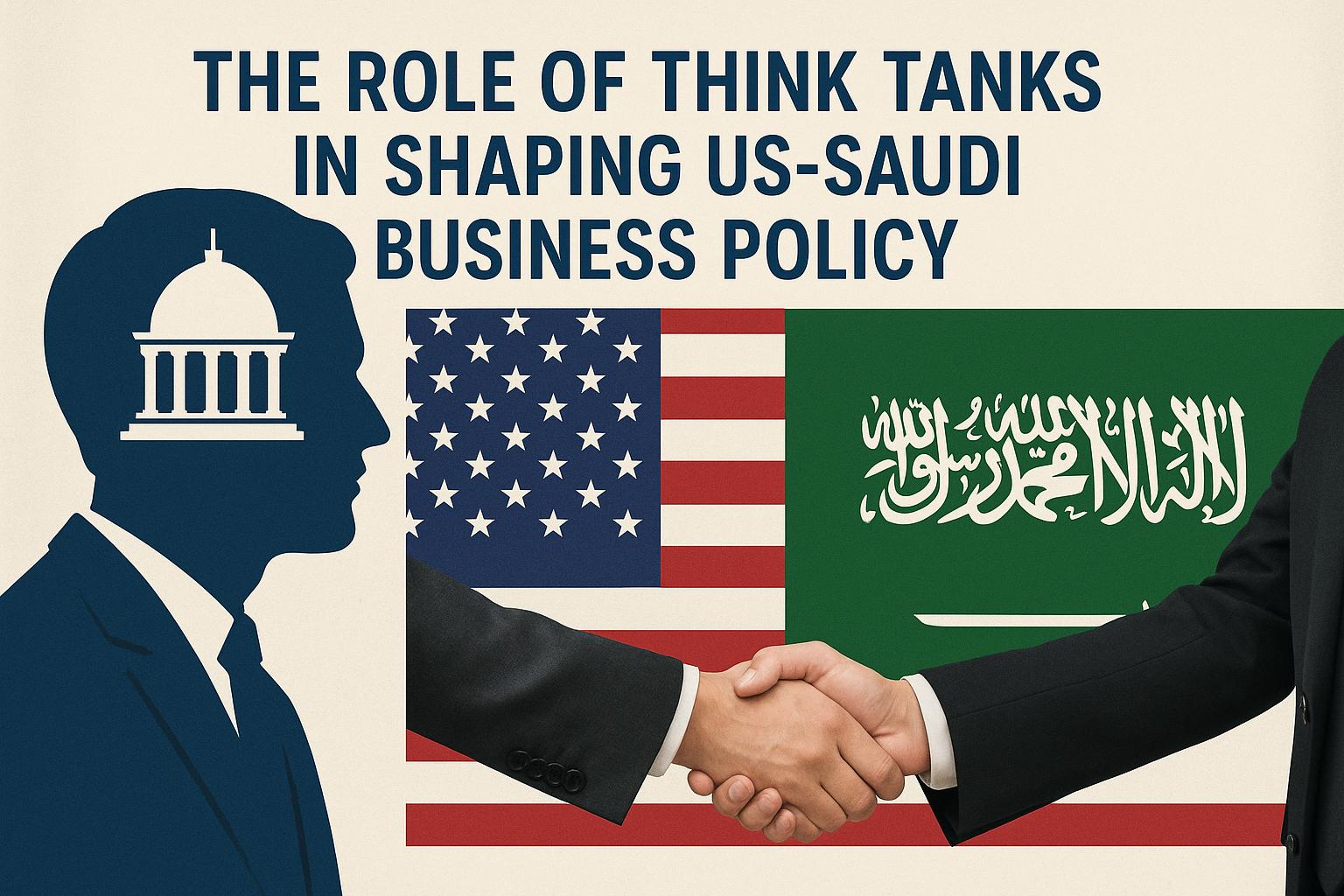
Think tanks occupy a pivotal role in the development and shaping of business policies between the United States and Saudi Arabia. These entities are primarily engaged in extensive research and advocacy, which involves offering critical analyses and recommendations that ultimately exert a significant influence on the policymaking processes.
Understanding Think Tanks
Think tanks are institutions dedicated to conducting research and promoting advocacy in various fields such as social policy, political strategy, economics, military affairs, technology, and culture. These organizations may be affiliated with academic institutions, government entities, or private enterprises. In the specific context of US-Saudi relations, think tanks serve as vital instruments in narrowing the understanding gap concerning economic and strategic priorities between the two countries.
Key Activities of Think Tanks
Several key activities define the contributions of think tanks to US-Saudi business policy:
Research and Analysis: Think tanks engage in producing detailed analyses of the economic, political, and social trends prevalent both in the United States and Saudi Arabia. Such analyses are essential to grasp the larger context in which business policies are crafted. By offering a comprehensive understanding of these trends, think tanks assist policymakers in identifying challenges and opportunities within both domestic and international business landscapes.
Policy Recommendations: Drawing on their research findings, think tanks propose policy recommendations that have the potential to shape negotiations and formalize bilateral agreements. These recommendations capture the attention of decision-makers who are seeking to enhance bilateral trade and economic cooperation. By incorporating evidence-based suggestions, policymakers can craft informed policies that align with both nations’ strategic and economic objectives.
Forums and Conferences: Many think tanks organize events that convene policymakers, business leaders, and academics. These forums become platforms for discussion, debate, and exchange of ideas, directly influencing policy formulation processes. Through these interactions, think tanks facilitate the dissemination of new insights and approaches, encouraging cooperative strategies that foster stronger business relations between the two nations.
Impact on Business Policy
The influence of think tanks on US-Saudi business policy is complex and multifaceted:
The contributions of think tanks provide vital information to policymakers about crucial topics, including energy security, trade agreements, investment opportunities, and regional stability. Such information is critical in crafting policies that not only cater to economic interests but also align with broader strategic objectives shared by both nations.
For example, the insights produced by think tanks can highlight potential opportunities for American companies in the Saudi market, especially in light of Saudi Arabia’s Vision 2030 initiative. This ambitious vision aims to diversify the Kingdom’s economy while reducing its dependence on oil exports. By identifying these opportunities, think tanks equip companies with the strategic knowledge necessary to adapt business strategies and negotiate favorable bilateral agreements.
Examples of Influential Think Tanks
Several influential think tanks are actively shaping US-Saudi business policies:
The Center for Strategic and International Studies (CSIS): Renowned for its comprehensive research concerning international relations and economics, the CSIS provides insights that have the capacity to influence policy decisions related to US-Saudi partnerships. Through detailed reports and policy briefs, the CSIS offers analyses that help in understanding the geopolitical dynamics impacting business collaborations.
The Brookings Institution: With a concentration on economic and social policy, the Brookings Institution contributes analyses that enhance the understanding and development of international business policies involving Saudi Arabia. By examining economic trends and social changes, the Brookings Institution aids in crafting policies that support sustainable and equitable economic growth.
Further Considerations
Think tanks not only play a strategic role in influencing policy frameworks but also act as custodians of academic integrity. They are uniquely positioned to synthesize data from multiple sources, providing objective and scholarly insights into the intricate web of international relations. By harboring this level of neutrality, think tanks can address disagreements and aid in building consensus among key stakeholders involved in US-Saudi business relations.
Moreover, their role often extends into the realm of fostering intellectual exchange between the nations. By hosting cross-national workshops and symposia, think tanks offer arenas for fostering transnational collaborations in research and development, whereby shared economic and technological advancements benefit both parties.
The Road Ahead for Think Tanks
With the rapidly changing global landscape, think tanks are likely to attain greater significance. As issues such as climate change, cybersecurity, and digital economy continue to dominate discussions, the role of think tanks in shaping economic strategies that address these global challenges also gains prominence.
The advancement in technology and data analytics might further enhance the capabilities of think tanks, allowing them to develop more predictive models and contribute to evidence-based policymaking. By utilizing such cutting-edge methods, think tanks can remain at the forefront of impacting and guiding US-Saudi business relations.
Conclusion
It is evident that think tanks are essential players in shaping the business policies between the United States and Saudi Arabia. By providing valuable insights, facilitating policy discussions, and offering evidence-based recommendations, think tanks assist decision-makers in navigating the complexities of international business relations. Their endeavors ensure that policies remain robust, well-informed, and mutually beneficial to both nations. As this relationship evolves, the contributions of think tanks will continue to be integral in enhancing and maintaining a harmonious economic partnership.
This article was last updated on: January 1, 2026